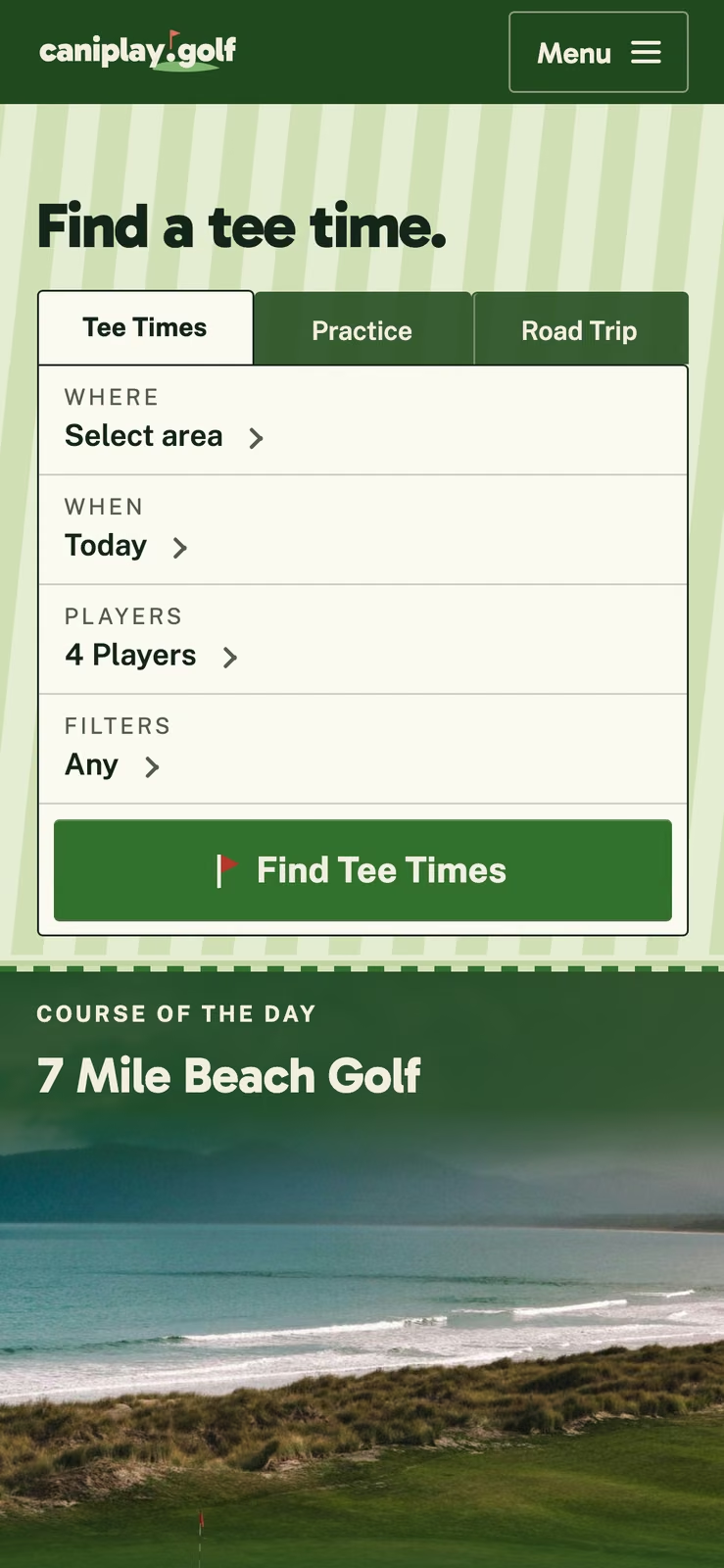
I built caniplay.golf as a personal tool. It’s grown into a national golf discovery platform.
The Job
- 01Product strategy
- 02Multi-source integrations
- 03UX & interaction design
- 04AI-assisted development
Stack
Next.js · TypeScript · Python · FastAPI · Supabase · OpenRouteService · PostHog · Vercel
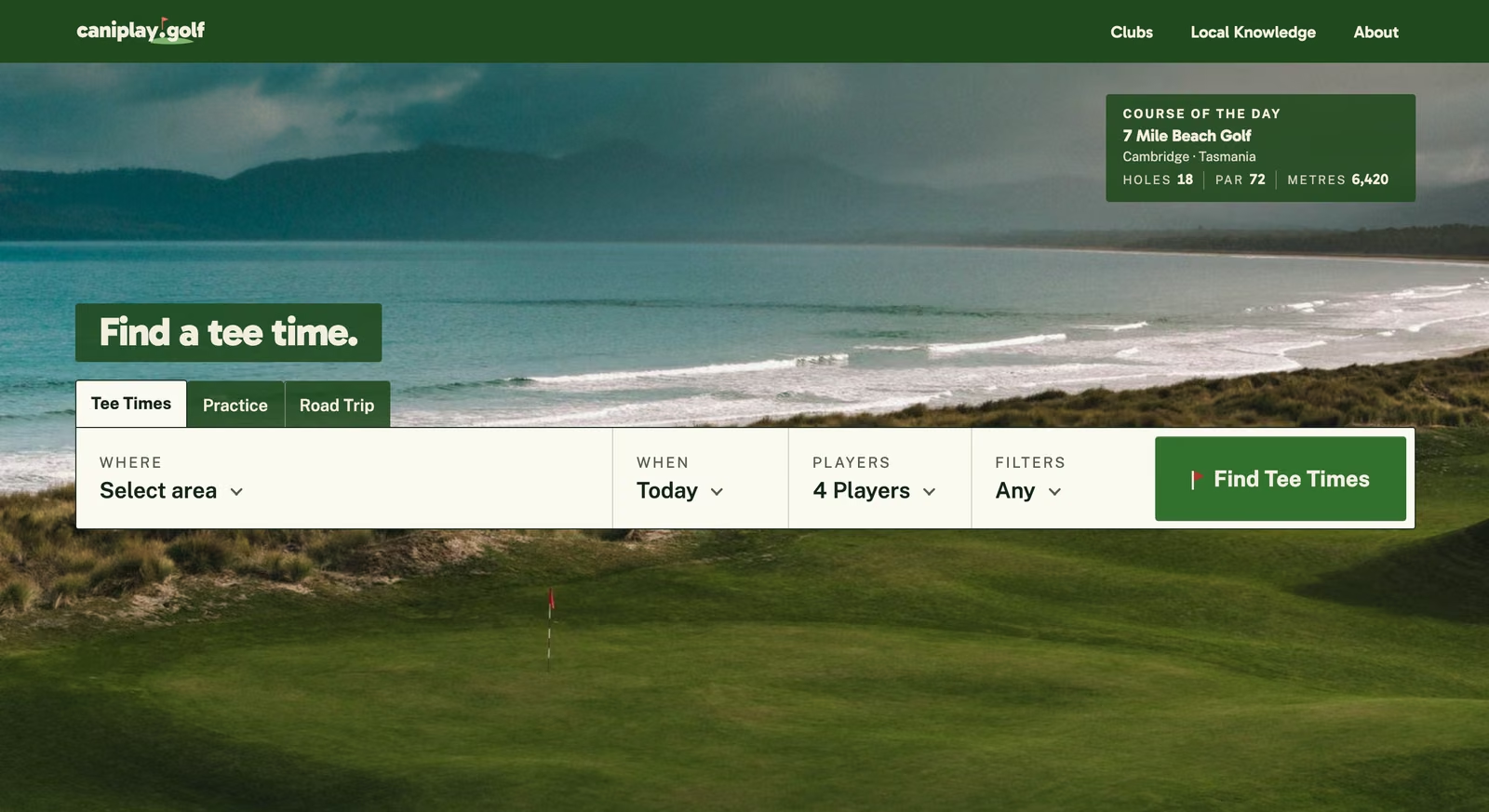
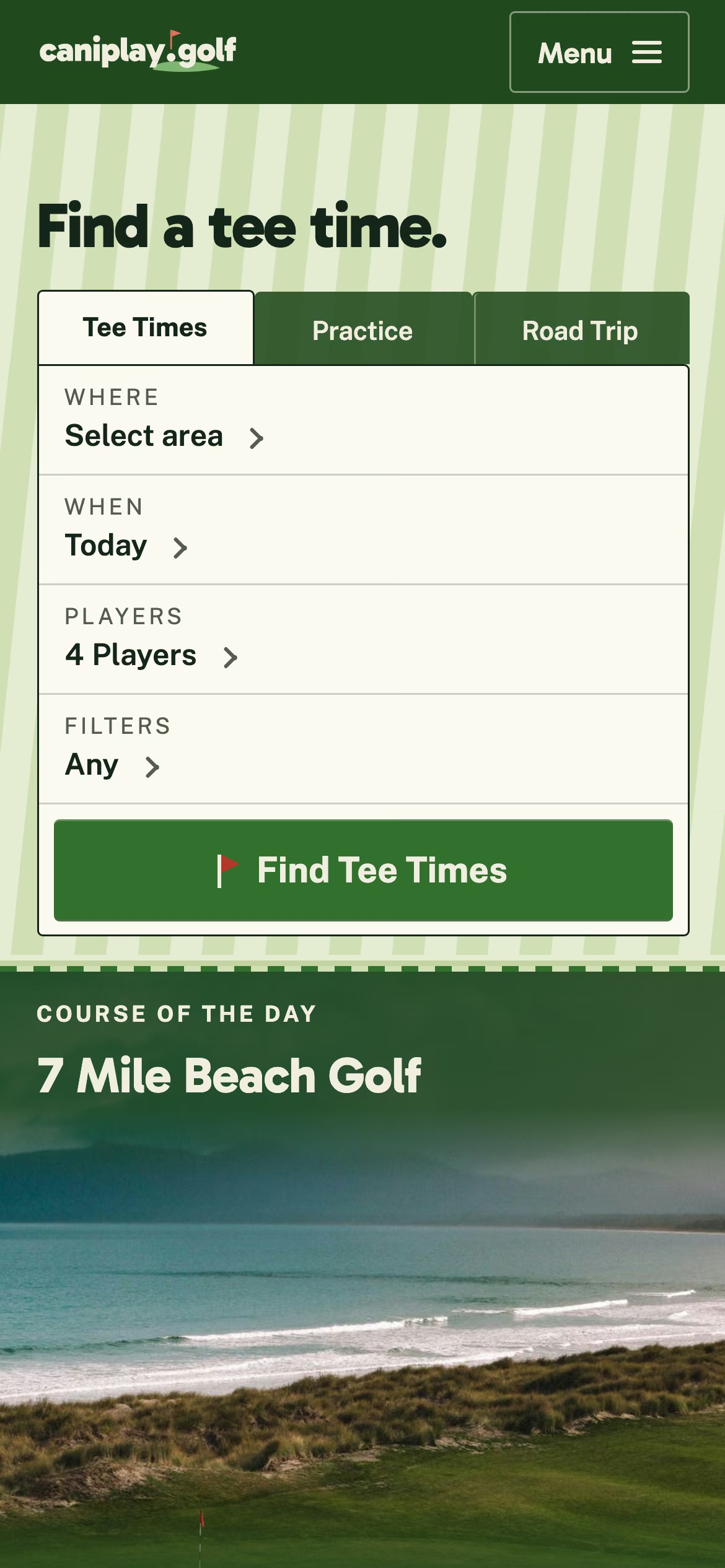
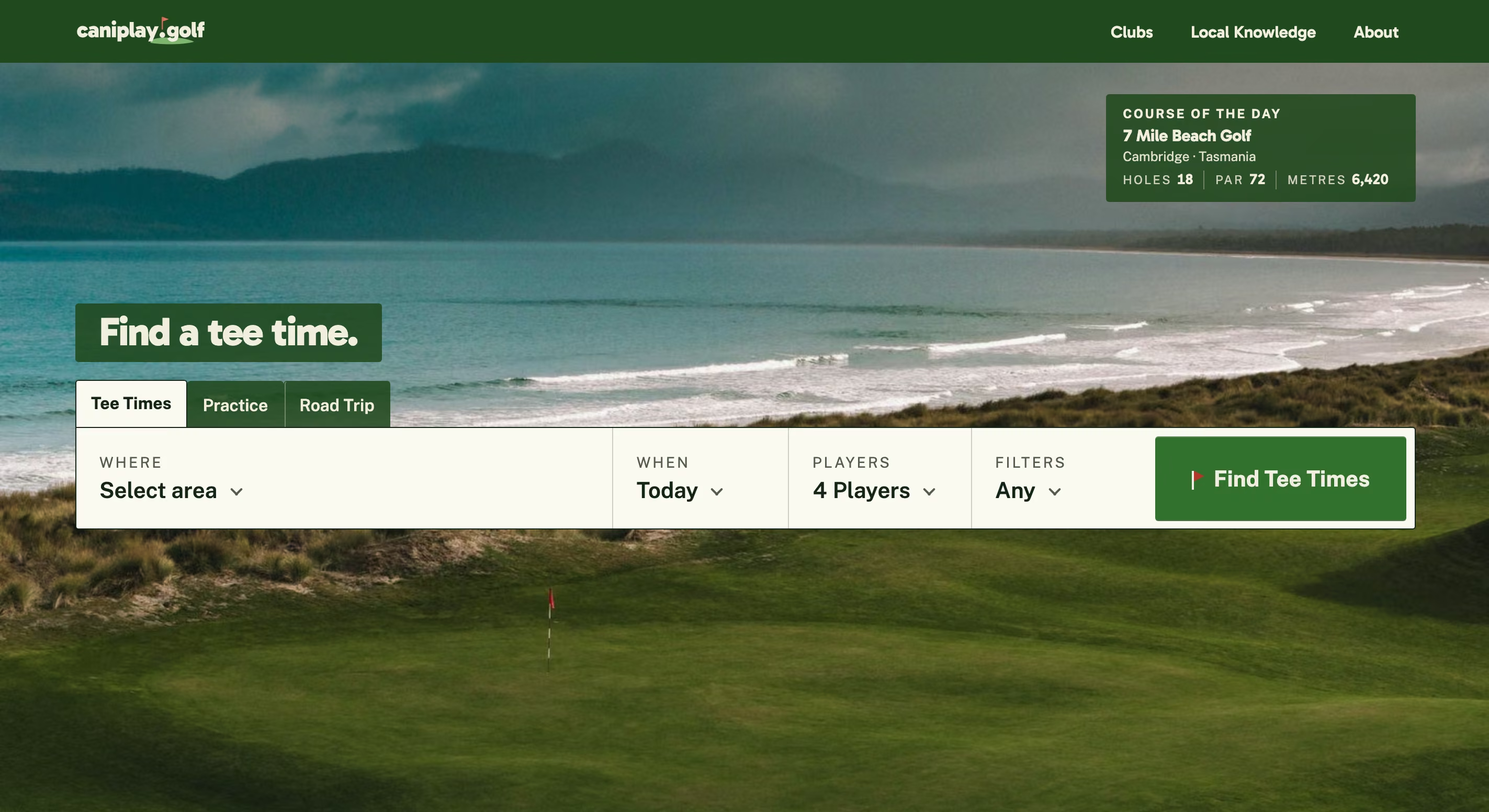
What started as a fun side project now covers over 1,650 places to play across Australia. It brings live tee times from different booking platforms into one search, so finding somewhere to play doesn’t mean checking a dozen club websites.
The build pairs a Next.js and TypeScript front end with a Python and FastAPI search engine. Club profiles and articles have pages Google can index, while the search engine handles live availability.
Each booking platform needs its own connector. Some return web pages, others structured JSON, including responses to GraphQL queries. The Python connectors translate those different responses into consistent tee-time data. Results appear as they arrive, so a slow booking system doesn’t hold up everything else.
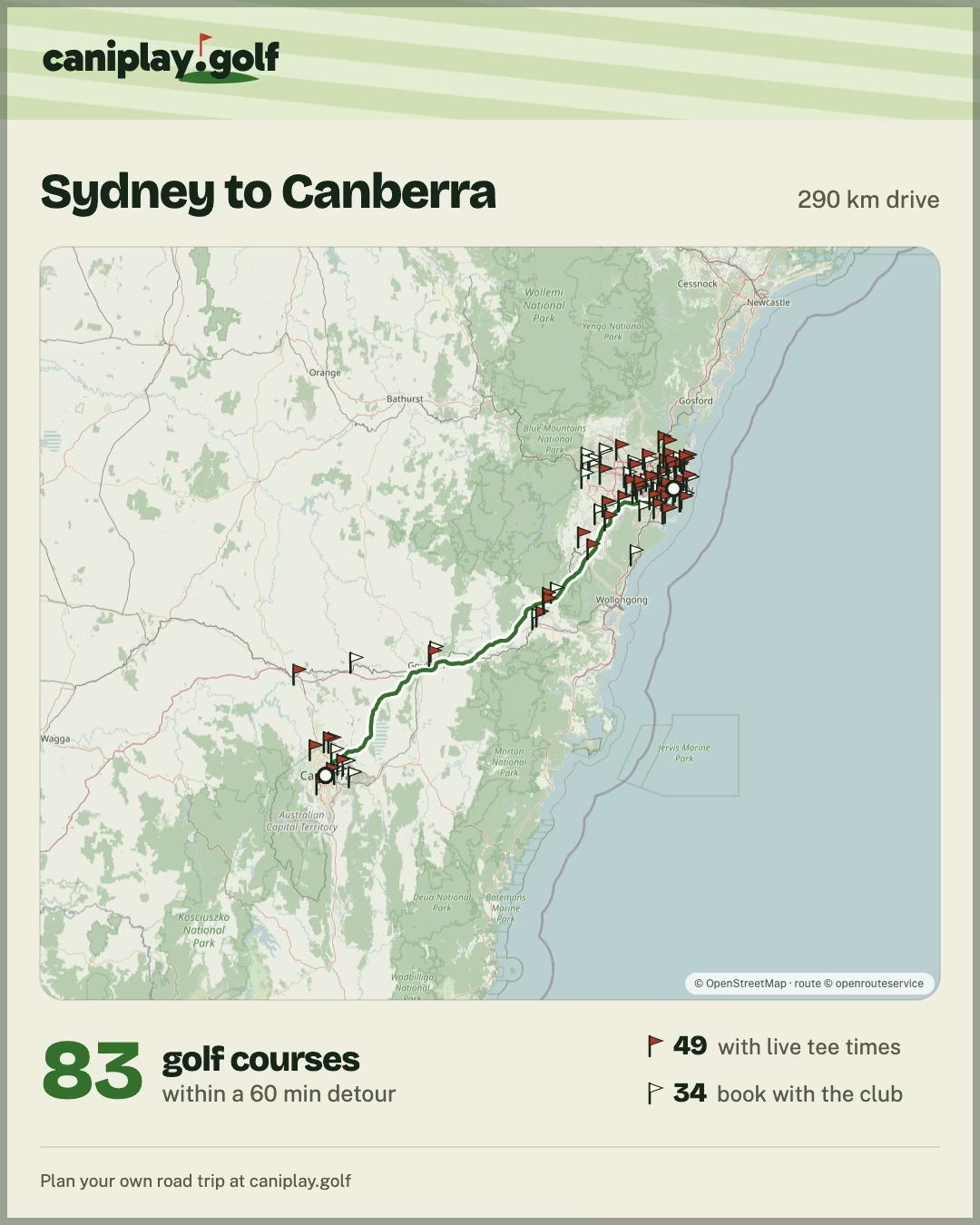
Road trip lets users enter a journey and how far they’re willing to detour for a round. OpenRouteService calculates the route and driving times to identify courses within the detour limit. Supabase keeps a shared record of routing usage across servers so the app stays within the provider’s allowance. Users can then check those clubs for live tee times and a custom share card is drawn directly in the browser using Canvas, combining the route and course locations into a branded image users can send to the group chat through their phone’s native sharing controls.
The clubs explorer uses a custom SVG map, with clickable states and regions, built from the same club registry that feeds the search. It works without a map library or external map tiles and gives people another way to find somewhere to play around the country.
Agents use Google Search Console data to suggest content concepts, which are researched, written and designed before human review and sign-off.
The build has been iterative, taking features from product and design decisions through implementation with AI agents, then refining them through hands-on testing and review. The release process includes code review and automated tests covering booking-platform responses, search behaviour and routing limits, alongside browser checks for mobile layouts, accessibility and map interactions.
I’ve got a few extra features already in the works, so watch this space.